

Health benefits
of
kiwi fruit
What Is Kiwifruit and Why Does It Matter?
Kiwifruit, also known as the Chinese gooseberry (Actinidia deliciosa), is a small brown fruit with bright green flesh and a refreshingly sweet-tangy taste. The kiwifruit origin traces back to China, but today’s green kiwifruit (Actinidia deliciosa) has become synonymous with New Zealand, also home to both kiwi birds and kiwi’s (the people).
Many people wonder is kiwi a fruit or a berry—and the answer is both: it’s botanically classified as a berry but widely recognised as a fruit. What makes kiwifruit matter is more than its flavour. Packed with vitamin C, fibre, potassium, and powerful antioxidants, it delivers outstanding kiwi fruit health benefits such as supporting digestion, boosting immunity, and promoting heart health. Once a humble wild fruit, kiwifruit has grown into a global symbol of nutrition and wellness, making it much more than just a tasty snack—it’s a true superfruit.
In a historic milestone, green kiwifruit is now the first fresh fruit ever to receive an authorised health claim from the European Commission. This achievement follows more than 15 years of research and clinical studies.
EU Approves Health Claim for Green Kiwifruit: Digestive Benefits Confirmed
The European Commission has approved the statement:
“Consumption of green kiwifruit contributes to normal bowel function by increasing stool frequency.”
This claim is based on eating two fresh green kiwifruits (200g of fruit flesh) daily.
The approval is highly significant: in the past five years, only three health claims have been accepted. Less than one in eight submissions succeed, highlighting the strength of the evidence behind green kiwifruit.
How Green Kiwifruit Earned EU Approval for Digestive Health Benefits
The dossier included 18 human intervention studies, six of which provided strong evidence for digestive benefits. In 2021, the European Food Safety Authority (EFSA) gave a positive opinion, paving the way for this authorisation.
This recognition underscores kiwifruit’s value as a nutrient-rich natural food packed with fibre, vitamins, and minerals that support digestive and overall health.

8 Health Benefits of Green Kiwi Fruit

Supports Digestive Health
Green kiwifruit is most widely recognised for its digestive benefits. Beyond improving bowel regularity, it contains a unique enzyme called actinidin, which helps break down proteins from meat, dairy, and plant foods. This improves nutrient absorption and reduces discomfort like bloating or indigestion. The high fibre content—both soluble and insoluble—also helps soften stools, prevent constipation, and maintain a healthy gut microbiome. For individuals with sluggish digestion, daily kiwifruit consumption can make a noticeable difference in overall digestive comfort.

Boosts Immunity
A single medium kiwi delivers over 70% of the daily recommended vitamin C intake, a nutrient essential for immune function. Vitamin C acts as a powerful antioxidant, stimulating white blood cells to fight off infections and reducing the severity and duration of colds. Combined with vitamin E and polyphenols, kiwifruit helps protect the body from oxidative stress and supports faster recovery from illness. Regular consumption can provide year-round immune support, especially during the winter flu season.



Improves Heart Health
Cardiovascular health benefits are another reason kiwifruit is considered a superfruit. Its high potassium content balances sodium levels, helping regulate blood pressure and protect against hypertension. Antioxidants, including polyphenols and flavonoids, reduce oxidative damage to blood vessels and lower the risk of atherosclerosis. Clinical studies suggest that eating 2–3 kiwifruits daily may improve blood lipid profiles, reduce platelet aggregation (blood clotting), and enhance overall vascular health—making kiwifruit a natural ally for heart protection.

Aids Weight Management
Green kiwifruit is an excellent fruit for those managing their weight. At only 42–50 calories per fruit, it provides a nutrient-dense option that promotes satiety without excess calories. The combination of fibre and natural sugars supports slow energy release, helping curb cravings and prevent overeating. Eating kiwifruit as a snack or before meals can reduce appetite, making it easier to follow a balanced, calorie-controlled diet. Its high water content also contributes to hydration, which is important for weight-loss success.

Enhances Skin Health
Your skin benefits directly from kiwifruit’s rich supply of vitamin C, vitamin E, and antioxidants. Vitamin C stimulates collagen production, which keeps skin firm and youthful, while vitamin E protects against free radical damage caused by sun exposure and pollution. The antioxidants present in kiwifruit slow the ageing process by reducing oxidative stress, while its hydration and fibre support healthy, glowing skin from the inside out. Regular consumption may improve skin elasticity and help reduce the appearance of fine lines and wrinkles.


Improves Sleep Quality
For those struggling with sleep, kiwifruit can be a natural solution. Studies have shown that consuming kiwi about an hour before bedtime may improve both sleep duration and sleep quality. This effect is linked to the fruit’s serotonin content, a neurotransmitter that helps regulate sleep cycles and mood. In addition, the antioxidants and folate in kiwifruit may reduce oxidative stress and support nervous system function, both of which can promote restful sleep. Unlike sleep aids, kiwifruit offers a safe, natural, and nutrient-rich approach to better sleep.

Supports Eye Health
Green kiwifruit is rich in lutein and zeaxanthin, two carotenoids known to support vision and protect against age-related macular degeneration (AMD), a leading cause of blindness in older adults. Combined with vitamin C and other antioxidants, these compounds help shield the eyes from oxidative stress and harmful blue light. Regular kiwifruit consumption may also reduce the risk of cataracts and maintain sharper vision well into later life.

Strengthens Bones
Strong bones require a steady supply of nutrients, and kiwifruit delivers many of them. It contains vitamin K, which plays a crucial role in calcium absorption and bone mineralisation, reducing the risk of fractures and osteoporosis. The fruit also provides small but valuable amounts of calcium, magnesium, and phosphorus, all of which contribute to bone density and strength. For ageing adults, incorporating kiwifruit into a balanced diet can support long-term skeletal health.
How to get your kiwifruit intake up!
Kiwi fruit storage
Proper kiwi fruit storage helps preserve both flavour and nutrition. Unripe kiwifruits should be kept at room temperature until they soften, and if you want to speed up ripening, place them in a paper bag with apples or bananas. Once ripe, kiwis can be stored in the refrigerator for up to one to two weeks, keeping them fresh and juicy. For longer storage, sliced kiwifruit can be frozen and later used in smoothies or desserts without losing its nutrient benefits. Learning the best way to store kiwifruit ensures you always enjoy this healthy fruit at peak freshness.
How to Eat Kiwi Fruit
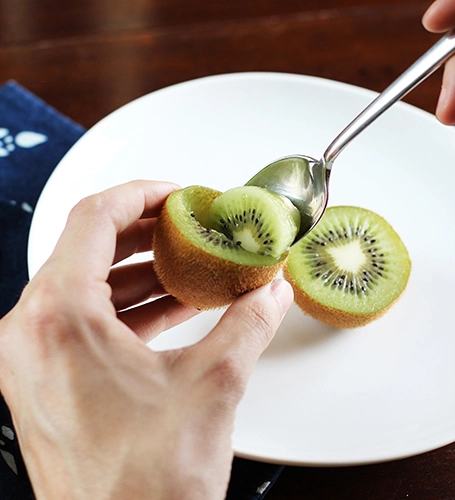
Eat kiwifruit with a spoon:
When peeling and slicing a kiwifruit is too much, simply cut it in half and dig in with a spoon.
Fruit salads and smoothies:
Tossed in a quick smoothie or sliced into a salad, kiwifruit provides a flavourful zing to any dish, along with its potent nutrition.
Whether you’re discovering what kiwi fruit is for the first time or you’re a longtime fan of this fruit, understanding proper storage, preparation, and the full scope of kiwi fruit health benefits helps you maximise this nutritional powerhouse’s potential in your daily diet.
Can you eat kiwi fruit skin?
Yes, you can eat kiwi fruit skin, and doing so actually offers several health benefits. The skin is packed with fibre, vitamins, and antioxidants, which can help support digestion, boost your immune system, and improve overall health. While the fuzzy texture may feel unusual at first, many people find it enjoyable once they get used to it. To make it more palatable, you can wash the kiwi thoroughly to remove any dirt or residues, and then either eat it whole, slice it into salads, or blend it into smoothies. Eating the skin not only maximises the fruit’s nutritional value but also helps reduce food waste. For those who are sensitive to the fuzz, rubbing the skin lightly with a towel or cutting off just the tips can make it easier to eat without losing its benefits.
Enjoy the Benefits of Kiwi Year-Round with Actazin Green Kiwifruit Powder
Can’t find fresh kiwifruit because it’s out of season? Or always on the go? Actazin whole green kiwifruit powder is the perfect solution. Clinically proven, this convenient powder delivers the same functional benefits as eating two whole green kiwifruits, all in a low 600 mg daily dose. Shelf-stable for up to three years, Actazin retains the natural enzymes, fibre, and nutrients found in fresh kiwifruit, supporting digestion, gut health, and overall wellness. Whether you add it to smoothies, yogurt, or simply mix it with water, Actazin makes it easy to enjoy the health benefits of kiwi anytime, anywhere, without worrying about freshness or seasonality.
You can find a range of finished products with Actazin here.
Green versus gold kiwifruit
Green kiwifruit is the better pick for fibre and vitamin K, and it generally carries more of the enzyme actinidin. Gold kiwifruit wins on vitamin C and sweetness, and the digestive research cited on this page was done on green. Livaux has a side-by-side comparison of green and gold kiwifruit nutrition with the full per-100 g figures.
What the studies on kiwifruit and digestion actually show
The EU-authorised claim above rests on a body of trials, and those trials are less uniform than the claim suggests. Four of them show the range.
| Study | Design and participants | Dose | Result |
|---|---|---|---|
| Gearry et al., 2022 (ACG) | Multicentre, randomised, single-blind crossover with psyllium as comparator. Functionally constipated n=60, IBS-C n=61, healthy n=63 | 2 green kiwifruit a day, 4 weeks | Bowel movements up 1.69 a week in the constipated groups (p<0.0001 vs baseline), up 1.19 in healthy adults. Stools softer (Bristol scale +0.6) |
| Chey et al., 2021 | Exploratory, partly randomised, parallel. US adults with chronic constipation, n=79 | 2 green kiwifruit a day, 4 weeks | Bowel movements up 1.0 a week vs baseline (p<0.01). Less straining and less bloating. Prunes (+2.7) and psyllium (+1.7) raised frequency more, and did not reduce bloating |
| Rush et al., 2002 | Randomised, uncontrolled crossover (preliminary study). Healthy older adults, n=48 | 1 fruit per 30 kg body weight (2 to 3), 6 weeks | Easier passage (p<0.0001), stool consistency improved 14%. Weekly bowel movements +0.54, short of the usual statistical threshold (p=0.06) |
| Wilkinson-Smith et al., 2019 | Randomised crossover. Healthy adults, n=14 | 4 green kiwifruit a day (2 twice daily), 3 days | +0.32 bowel movements a day vs control (p=0.034), softer stools (Bristol scale +0.6) |
Read them with three limits in mind. Three of the four ran four weeks or less. Several compared against baseline rather than a placebo group, and the Rush study was uncontrolled. And the gains were roughly one to two extra bowel movements a week at best: real, but modest.
The Chey trial is the useful reality check. If frequency alone is the goal, prunes did more. Kiwifruit stood out on straining and bloating, which is why we position it for digestive comfort rather than as the strongest laxative fruit. The head-to-head with psyllium is covered in our kiwifruit versus psyllium comparison.
How many kiwifruit a day, and who should be careful
Two green kiwifruit a day has the best evidence. It matches the 200 g of flesh in the EU claim and the intake in the largest trials above. If you are smaller, or new to kiwifruit, start with one a day and build up over a week, because extra fibre can cause gas at first. In the Gearry trial healthy adults also had about 1.2 more bowel movements a week, so if you are already regular, expect looser stools rather than an improvement.
Some people should check before making kiwifruit a daily habit:
- Warfarin users. Kiwifruit contains vitamin K (40.3 µg per 100 g for green, per USDA). Hospital guidance for people on warfarin is to keep vitamin K intake steady rather than cut foods out, and kiwifruit appears on those lists. Tell your anticoagulation clinic before you change how much you eat.
- Restricted potassium diets. At 312 mg per 100 g, two fruit add up. Anyone limiting potassium for kidney disease should agree portions with a dietitian.
- Allergy. Mouth itching or swelling after kiwifruit, or a known latex or birch pollen allergy, means stop and see a clinician (see the allergy answer in the FAQ).
Constipation that is new, painful, or comes with blood in the stool or unexplained weight loss needs a clinician, not a fruit bowl.
Fresh green kiwifruit or Actazin powder?
Fresh fruit is the default, and the cheapest option. A powder makes sense when you want a fixed daily amount that does not depend on season, ripeness or fruit size. That is the gap Actazin fills: whole New Zealand green kiwifruit, freeze-dried with Anagenix’s Target Bio-Lock process, taken at 600 mg a day.
Its own trials are small but controlled. In a randomised, double-blind, placebo-controlled trial of 43 healthy adults with occasional constipation, 600 mg a day for 28 days softened stools by 0.38 on the Bristol scale at day 14 (p<0.05 versus placebo and baseline). Complete spontaneous bowel movements rose by 1.44 a week by the end (p<0.001, measured against baseline, not placebo). An earlier crossover trial in 19 healthy adults found 2,400 mg raised weekly bowel movements by 0.77 (p=0.014), while 600 mg came close at +0.56 (p=0.06). The 600 mg clinical study report has the full detail.
We estimate a 600 mg daily dose gives bowel-regularity benefits comparable to two or more whole green kiwifruit. That comes from comparing separate trials, not a head-to-head study, so treat it as an estimate. Fresh fruit also supplies vitamin C and water that 600 mg of powder does not. Product developers can see how the ingredient is used on our bowel regularity formulation page.
FAQ